
Following the required period of mourning, 133 cardinal electors will enter the Sistine Chapel on May 7, 2025, to elect the next pope of the Catholic Church. While there are 252 men in the College of Cardinals, only those under the age of 80 are allowed to vote. The cardinal electors participating in this conclave represent 72 countries, with 10 representing the United States.
When it is time for the conclave to begin, the cardinal electors process to the Sistine Chapel, and placing their hand on the Gospels, each one swears to uphold the rules and secrecy of the conclave. Cardinal electors are not permitted to have contact with the outside world during the conclave. The rules for a conclave are contained in the apostolic constitution, “Universi Dominici Gregis” (“Shepherd of the Lord’s Whole Flock”), which was issued by St. John Paul II in 1996 and amended by Pope Benedict XVI in 2007 and again in 2013.
Only one vote is taken on the first day at approximately 7 p.m. (1 p.m. EDT). The Cardinals vote by secret ballot four times per day on subsequent days, at approximately 10:30 a.m. (4:30 a.m. EDT), noon (6 a.m. EDT), 5:30 p.m. (11:30 a.m. EDT) and just after 7 p.m. (1 p.m. EDT). However, according to Catholic News Service, “if the first ballot of the morning or of the afternoon session does not result in an election, a second vote begins immediately, and the two ballots are burned together.”
When it is time to cast their vote, the cardinals write the name of the man they choose to elect on a private ballot. They then process one by one up to Michelangelo’s fresco of the Last Judgment, say a prayer and drop their ballot in a large urn. Ballots are counted by three “scrutineers,” and then the work is checked by three “revisers.” These men are chosen by lot at the start of the conclave. If no one receives the necessary two-thirds of the vote, the ballots are burned with chemicals to produce black smoke, and the conclave continues.
When a man receives the necessary two-thirds vote, the dean of the College of Cardinals asks him if he accepts his election. If he accepts, he chooses a papal name and is led to the “Room of Tears,” where he dresses in papal vestments for the first time. The ballots of the final round are burned with chemicals to produce white smoke to signal to the world the election of a new pope.
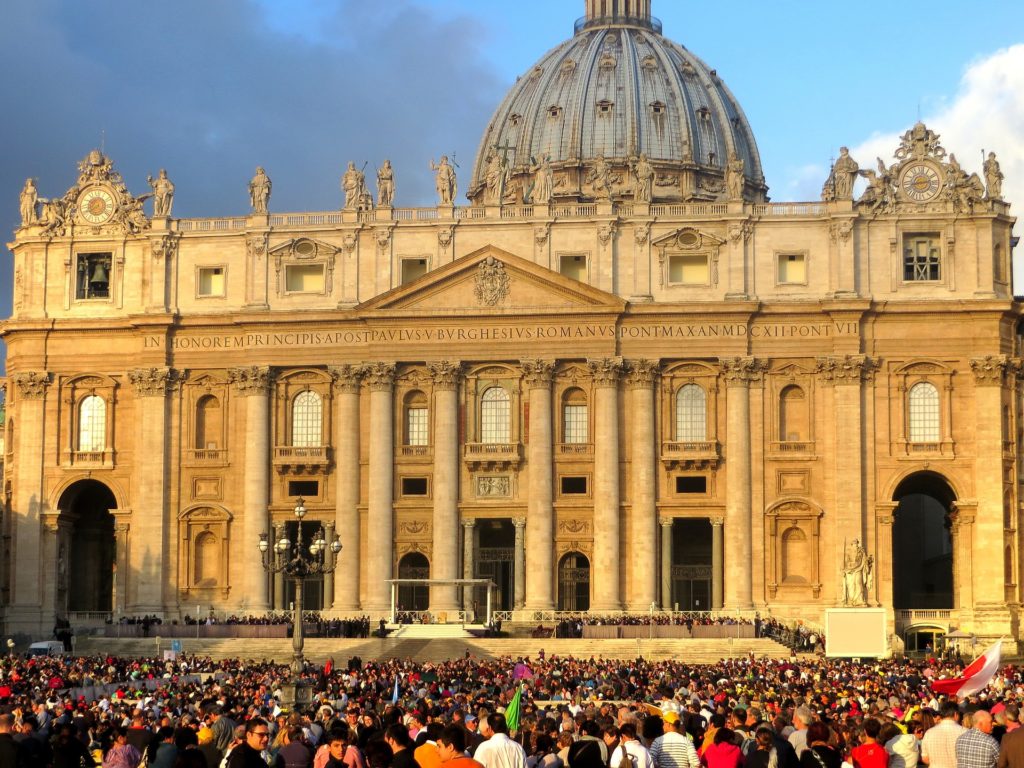
The senior cardinal deacon, currently French Cardinal Dominique Mamberti, Prefect of the Supreme Tribunal of the Apostolic Signatura, announces from the balcony of St. Peter’s, “Habemus Papam” (“We have a pope”). Then the new pope processes out and imparts his blessing on the city of Rome and the entire world.
The last seven conclaves lasted three days or less.
Please join us in praying for the cardinals during this time of discernment. (USCCB prayer for the election of a new pope)
Watch the live feed from St. Peter’s Square
Learn more from Vatican News:
How a pope is elected
How locking cardinals in a room became known as a conclave
Infographics from the USCCB (Inside the Conclave | Counting the Cardinals)